Articles in section: 'Music Reviews'

Tom Jones: Spirit in the Room

Review of Spirit in the Room by Tom JonesAt the age of 72, most pure pop vocalists (if they’re still able to sing) are playing it safe, rehashing their tried and true work, or recording duets with friendly young stars to lift their visibility. Spirit in the Room,the new album from Tom Jones on Rounder Records in the U.S., is, however, nothing like that.

A couple of months back, I wrote at some length about the recording which is the opening tune on this album, namely Tom Jones’ rendition of “Tower of Song,” written by Leonard Cohen. I found it quite moving, brilliant and defining. I still do, and listening to the album which accompanies it does not disappoint. I think that any day would be a nice day to hear an album like this one.

There’s a certain kind of courage involved for a vocalist in tackling new material—material which has hardly been touched by other vocalists—and it’s on display here, albeit that the casual listener might not necessarily pick up on it. Since Dylan and the Beatles, the notion of “authenticity” has been very weighty in the sphere of popular music, and it’s inherently challenging for a singer to take on a song that has already been sung by those that have composed it. Tom Jones here, in collaboration with his producer Ethan Johns, shows no fear, but sings songs that have been recorded both very recently and quite brilliantly by the respective composers. That he pulls it off in each case without sounding ridiculous is no small achievement. And he generally does much better than that. [Read more →]

Ron Sexsmith: Forever Endeavor

Review of Forever Endeavor by Ron SexsmithWhat is it about a great Ron Sexsmith song that can be so very pleasing and satisfying, right on the first hearing? I was trying to work that out while listening to one after another on his latest album, Forever Endeavor. For me at least I think it’s something like this: One has heard in one’s lifetime a whole lot of songs, by artists one likes a little or a lot, and there are so many instances where a song begins with promise but instead of fulfilling that promise it gets stuck, or reaches for a height it cannot attain. Sexsmith at his best can turn out a tune that is just so right, musically and lyrically, and seems to arrive and unfold effortlessly. He writes with an innate knowledge of so much of what’s come before him, and blends musical and lyrical references without strain.

Take just one song on this record. We’ve all heard of “Lonely Avenue,” but Ron Sexsmith gives us “If Only Avenue,” with a perfectly wistful and irresistible melody.

With the luxury of hindsight
The past becomes so clear
As I look out on the twilight
My days have become years
It’s strange, as people we’re prone to dwell
On things that we can’t undo
And we’re liable to wander down
If Only Avenue

Cue the wonderfully languid riff that anchors the tune, and basically there’s nothing you can say about this short, unpretentious pop song other than that it is flawless, and could easily be taken for a standard written forty years ago. As on a number of other tracks, producer Mitchell Froom has added string arrangements that are understated and apropos. The whole thing is just a sheer pleasure. [Read more →]

Tom Jones and a towering “Tower of Song”

ReviewScheduled for release on April 23rd in the U.S. (on Rounder Records) is a new album from Tom Jones, titled Spirit in the Room. It was released on the other side of the pond last year. I confess I’ve only just become aware of it, and that was through my encountering on YouTube the video for Tom Jones’ rendition of Leonard Cohen’s great old tune “Tower of Song,” which is the first track on the album.

This is one of those cases where yours truly tries not to come across too hyperbolic and breathless, but, frankly, hearing Tom Jones’ performance of this song left me simultanously devastated and delighted. It’s one of those musical moments I would compare to tripping over a bag in the street stuffed with two million dollars in unmarked bills, and making it all the way home with it safely. Those are the good days. If you have not heard it, do take a listen to it via the embedded YouTube clip here and I’ll say a few more words of my own about it below.

(A side-note: Many other artists ought to watch that clip and learn that there are ways to make videos that neither detract nor distract from the song. Kudos to the director, one Paul Caslin.)

The song was first recorded by Leonard Cohen on his great 1988 album I’m Your Man. Leonard’s version features a sparse kind of piano/synth arrangement, with backing singers, distinctly low-budget but witty. Yet Tom Jones’ stripped-down rendition makes Cohen’s seem exceedingly ornate by comparison.

To me, at least, Tom Jones’ version of “Tower of Song” is one of those revelatory performances where a singer takes a song to a place that the songwriter himself could not have envisioned, and lives in it and makes it his own.

When Cohen wrote the tune, it was the song and testament of a songwriter. He sounded pretty darned old in 1988, looking back (and to a degree looking forward) on his life and the vocation of songwriting and meditating both profoundly and humorously upon it. He was in fact about fifty-four years of age. (Who knew that twenty-five years later he’d be experiencing a peak of popularity, undertaking huge concert tours and continuing to write some of the best songs of his career? Certainly he, of all people, did not know it.)

There is a couplet in the song that I think is crucial both to the original rendition and to this cover version:

I was born like this, I had no choice
I was born with the gift of a golden voice

In Cohen’s version, this is an exquisite joke—a self-deprecating piece of irony. No one ever accused Leonard of having a golden voice, although many have accused him of having a voice comparable to considerably less precious substances. The couplet is both a gag and a metaphor: his gift, as we know, is actually that he is a writer. He is obliged by some ineffable commandment to write his songs, but he also finds that he must sing them himself, regardless of his voice, simply so that they will be heard.

Yet, sung by Tom Jones, the magical and beautiful thing is that [Read more →]

David Bowie: “Where Are We Now?”

Review of Where Are We Now by David BowieThe new David Bowie song, “Where Are We Now?” (embedded via YouTube below) has been generating a frenzy of attention, given it’s his first record in ten years and many thought he’d never put out another one. (He’s 66 years-old, which somehow sounds so old for David Bowie, while, by contrast, I think 71 sounds just right for Bob Dylan.) I like some of Bowie’s stuff over the years, but am not a rabid devotee, so the mere appearance of the new song didn’t knock me off my chair. But I happen to think it is quite good and quite lovely: an impressionistic, bittersweet reflection on aging, evoking sadness at things lost, and a poignant longing to hold on. And maybe some other things. Bowie is nothing if not good at leaving space for the listener to paint his or her own picture, and that’s so even in this case where the things he’s singing about are quite personal and specific to him. [Read more →]

Cerys Matthews: Baby, It’s Cold Outside (Christmas Classics)

Review of Baby It's Cold Outside: Christmas Classics from Cerys MatthewsBefore this Christmas season draws to an official close (there are twelve days of Christmas, y’know), I thought it worth noting one new addition to the already-gargantuan and ever-increasing library of Christmas albums. (I love great Christmas music and am known to listen to it in July.) It is a record titled Baby, It’s Cold Outside by a lady singer named Cerys Matthews, who emanates from the nation of Wales. She is little known west of the Atlantic Ocean, though she’s had quite an interesting and eclectic career, leading a rock/pop band by the name of Catatonia during the nineties, later going to live and work in Nashville for a few years and producing more folky/countrified kind of work, and in more recent times recording and releasing her renditions of traditional Welsh songs (and this album features one titled “Y Darlun.”)

With a title like Baby, It’s Cold Outside, one might well assume that this was a kind of swinging Dino kind of Xmas record, but that track is very much the exception, and in more ways than one; in fact, it’s probably best to circle back to it at the end of this little review. In actuality, this is an album of traditional and predominantly religious Christmas carols, performed in a sparse, folk-like context, albeit pretty far from any idea of folk purism. The central success of the album is in enlivening and refreshing these old tunes, like “Good King Wenceslas” and “We Three Kings Of Orient Are,” with live-in-the-studio performances that are just off-center enough to be interesting to the ear (with the odd exotic instrument thrown in), and which at the same time communicate an infectious sense of joy and mystery. Even “Jingle Bells,” which to me is probably the most annoying song to have to hear again and again during the holiday season, is performed winsomely enough here with banjo and sleigh-bells to raise a fresh smile. Similarly, “Go Tell It On the Mountains”—surely about as hackneyed a folk-hymn as one could name—is performed here as if it was composed yesterday, with a fairly overflowing spirit of gladness and urgency. That’s no small thing. [Read more →]

A Jolly Christmas from Frank Sinatra

Review of A Jolly Christmas from Frank SinatraThere’s a communal feeling about most Christmas music. Maybe this is because we generally hear the songs in the company of others, whether it’s as we’re elbowing our way down the aisles of the department store or perhaps singing along with them in church. I think that the most special thing about Frank Sinatra’s A Jolly Christmas
(Capitol Records, 1957) may well be how a very particular mood is created, quite different to that of the run-of-the-mill Christmas album. It is not so much a mood of lonesomeness (although Sinatra was well-skilled with evocation in that area) but a more nuanced and less inherently-sad sense of simply being alone at Christmas. Not miserable, and not necessarily overjoyed either, but simply contemplating and appreciating the season apart from the crowds and the relatives.

In the course of his long career Sinatra recorded plenty of Christmas music, from the sides with Axel Stordahl in the 1940s on Columbia (some very lovely stuff) to The Sinatra Family Wish You a Merry Christmas on Reprise in 1968 (predictably pretty cheesy). And these Christmas tracks get repackaged and resold over and over again. However, A Jolly Christmas is, to my mind, quite distinct. In 1957 when he went in to record it (during July in Los Angeles), Sinatra was truly at the peak of his artistic powers. Not only was his vocal ability (both the quality of his voice and his sense of how to use it) the best it had ever been or would ever be, but he was also at a peak of good taste. My theory is that Sinatra always personally had good taste, but later in his career he came to believe that his potential audience did not, and he dumbed things down at times in an effort to woo them. At this time, however, in the mid-1950s, Sinatra had a clear idea of what he wanted to do, musically-speaking, and what he was capable of, and he was able to work with arrangers and musicians of great excellence and taste themselves, and together they were able to put out records of a very high standard that in turn reached an appreciative and welcoming audience. All of these factors would never come together simultaneously again, and this is why Sinatra’s albums for Capitol Records in the 1950s stand as his greatest, and indeed as some of the most perfect examples of refined popular music that exist.

To put it in context, A Jolly Christmas was bookended by A Swingin’ Affair! (a sterling Nelson Riddle set) and Come Fly With Me (a masterpiece with Billy May). And released in exactly the same month (September of 1957) was Where Are You?, one of Sinatra’s great sets of lovelorn ballads, this one arranged by Gordon Jenkins, who likewise is the arranger for A Jolly Christmas. Jenkins had his strengths and weaknesses as an arranger, but there’s no doubting that his particular style is crucial in making A Jolly Christmas the unique kind of Christmas record that it is. [Read more →]

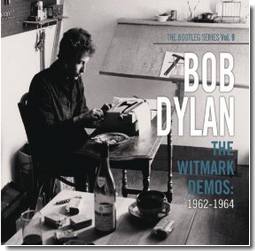
Tempest by Bob Dylan: Is it an unreviewable album?

Review of Tempest by Bob DylanI’ve been listening to Bob Dylan’s new album, Tempest (the iTunes version until my LPs arrive) over the past week and I’ve also been looking at some of the reviews. My impression at the moment is of a vast gulf between what the album contains versus what even the best reviewers have been able to say about it. I don’t think this is because the reviewers are stupid but rather that there really is so much going on in the songs on this album that a review of standard length and breadth is bound to come up short; this is true I think even more than to the usual degree. I mean, it’s always essentially impossible to write adequately about music, when only listening to it will communicate its nature, but Tempest is a special case, even when compared to many other Bob Dylan albums. I think we’re used to a Bob Dylan album having one or two or even three of the kinds of songs that blow one’s mind and take over one’s imagination. But Tempest, with ten songs, has I think at least eight that reach that level (though I’m not even going to say which two don’t).

On one level perhaps it’s just a question of fecundity. The album is highly populated with long songs, and even the songs that aren’t dramatically long contain lots and lots of words. Dylan’s never been one to record many instrumentals, but I think it’s been a long time since the lyrics have spilled out of him with this kind of volume and force. And not chaotically either: the lyrics are intricate and filled with terrific rhymes, and burst forth in his torn-up voice yet highly nuanced singing with confidence and purpose.

Now, I fully understand why all the people invited to those “listening sessions” earlier in the year were so wowed. An appreciative listener arrives at the end of this album somewhat breathless and slack-jawed in amazement (and not just on the first spin either).

Of-course, all of the above makes me sound like someone who worships everything Dylan does completely uncritically, but I’m long past apologizing for my affection and regard for Bob Dylan’s body of work. Check back in three hundred years and we’ll find out whether those who thought Dylan was very special have been vindicated or whether those who thought he was merely another purveyor of late-20th-century-type rock/pop songs were proven right.

It’s true that not everyone has been bowled over by Tempest. That’s fair enough—no one’s obliged to like it at all—but merely as a student of human nature I’m curious as to why some people who like what we can loosely call “this kind of music” and who attest to loving much of what Bob Dylan has done before would not be nearly as wildly-enamored of this album as others.

The review in the LA Times was not technically a bad review (3 stars), but included substantial caveats. Perhaps reflecting on some of the reservations can be illustrative of where the differences in perception lie.

The reviewer appears to be least-impressed by the title track, which is a fourteen-minute song based around the sinking of the Titanic.

[Bob Dylan] is officially an antique, a relic and the last of his kind in a world that has little time or patience to focus on a 14-minute song about the sinking of the Titanic when everybody already knows how it ends. This is the big, grand miscue on the record. In an Irish-tinged tune that repeats virtually the same 16-bar melody throughout its quarter-hour, Dylan in poetic verse recounts the sinking and the fate of its passengers with a singsong phrasing that grows tiresome.

Well, if “everybody already knows how it ends,” what is the point, indeed?

It’s not beyond the capacity of Bob Dylan to write and record a dull or monotonous track, but I admit it does beggar my own empathetic capacity to understand how someone who generally enjoys Dylan’s music could find this to be such a track. It requires some kind of imperviousness. The folky melody is certainly repetitive, but if you want symphonies, you’re in the wrong place, my friend. For me, the counterpoint of the lilting waltz with the subject matter of the song amounts to something very affecting. And Bob’s singing throughout is so filled with variations in tone and character that monotony is for me very far from the situation. Dylan is really proving on this album how someone with a voice that is so shot can nonetheless be a a singer of great expression and subtlety (at least in the studio).

Ah, but we know how the story ends! Well, to think that this song is intended to inform us of how the story of the Titanic ends strikes me as maybe a slight failure of imagination, or attentiveness, or both. The title of the song, “Tempest,” is the initial tip-off that we are not in literal-ville. The historical Titanic was not sunk in a storm, after all, but by an iceberg (of which there is not a single mention in the forty-five[?] verses). So one might begin to suspect there could be something metaphorical going on. How about the story of the Titanic as a metaphor for life and death—for all of our lives and deaths? In any case, for this longstanding fan of Dylan’s work, it is pretty darned difficult not to be galvanized by the driving parade of verses, some of which include:

The passageway was narrow
There was blackness in the air
He saw every kind of sorrow
Heard voices everywhere

The veil was torn asunder
Between the hours of twelve and one
No change no sudden wonder
Could undo what had been done

The ship was going under
The universe had opened wide
The roll was called up yonder
The angels turned aside

They battened down the hatches
But the hatches wouldn’t hold
They drowned upon the staircase
Of brass and polished gold

The watchman he lay dreaming
The damage had been done
He dreamed the Titanic was sinking
And he tried to tell someone

Ah, shucks, if only we didn’t know how it all ends! Oddly enough, despite knowing it all, I find myself coming to the end of this song only wide-eyed and dazed.

Literal-ville doesn’t seem to me like it would be the most interesting place to live, especially if all you’ve got to listen to are Bob Dylan songs. The same LA Times reviewer says he likes the song “Long and Wasted Years,” but sums it up blandly as “a bitter song about a dead marriage.” Oh! I hadn’t realized that’s all it was. Foolishly, I’d felt all kinds of deep vibrations and resonances in this song. But somehow, there must be a way to bang all those verses into shape as just another bitter song about a dead marriage.

My enemy crashed into the dust
Stopped dead in his tracks and he lost his lust
He was run down hard and he broke apart
He died in shame, he had an iron heart

We cried on a cold and frosty morn
We cried because our souls were torn
So much for tears
So much for these long and wasted years

Hmm. If I didn’t know it was only a bitter song about a dead marriage, I’d say the track fairly explodes with emotional echoes and reflections on things like love, loyalty, memory, forgiveness, and regret. In addition, in terms of the sound and vocal performance, it evokes Dylan’s great song from 1986, “Brownsville Girl,” suggesting however vaguely some kind of picking-up of that story many years later. I admit that the track downright makes my eyes well up from the very first verse onwards. Maybe I’ll be able to correct that by keeping in mind the words “bitter” and “dead” from now on (but I wouldn’t count on it).

The same reviewer helpfully points out that the song “Early Roman Kings” is “a blues that directs its wrath at the selfish rich in the same way that ‘Masters of War’ indicted the military-industrial complex in 1963.” Alright. Without reopening stale discussions of “Masters of War,” is slamming the selfish rich—like some “Occupy Wall Street” slogan—really what “Early Roman Kings” is all about?

I can dress up your wounds
With a blood-clotted rag
I ain’t afraid to make love
To a bitch or a hag

If you see me comin’
And you’re standing there
Wave your handkerchief
In the air

I ain’t dead yet
My bell still rings
I keep my fingers crossed
Like them early Roman kings

The LA Times reviewer appears to be way more savvy than yours truly, when it comes to hammering the latest Bob Dylan songs into some pre-ordained mold of meaning. For me, up until this point, I was just digging the attitude on this track. I hadn’t picked up on any political or social manifesto. I’ll keep trying, though. [Read more →]

The Lost Notebooks of Hank Williams

Review of The Lost Notebooks of Hank WilliamsHank Williams’ voice is a unique and a gigantic one in American culture, which means that it is also one familiar to those who listen to popular music all across the world. Hank Williams is recognizable singing, say, “I Saw The Light,” or “I’m So Lonesome I Could Cry,” even by people who couldn’t remotely be described as fans, in the same way as Bing Crosby is instantly recognizable singing “White Christmas,” or John Wayne is instantly recognizable in a cowboy hat saying, “The hell I will!” Hank Williams is just there as a reference point like the pyramids of Egypt or the Grand Canyon.

In speaking of Hank Williams’ voice, however, I very much mean it both in the sense of the instantly-recognizable product of his vocal cords and in the sense of what that voice has to say: how Hank Williams in singing a song describes the world, captures an emotion, issues a plea.

Although he died at the age of 29, Hank Williams is a patriarch of country music (if it’s legal to use the term patriarch anymore) but he is also much more than that: he is both patriarch and patron saint to songwriters everywhere, and to discerning aficionados of the art of song across all genres. No one lays it out there quite like Hank Williams did over and over again in his short songwriting career, with such a devastating combination of depth, honesty and economy. Even his more light and humorous songs are models of how to write a tune that’s instantly accessible, unpretentious and utterly timeless. [Read more →]

Tony Bennett Sings the Rodgers and Hart Songbook

Tony Bennett Sings the Rodgers and Hart SongbookTony Bennett isn’t very well known for whispering. He’s a big singer—not in the sense that he over sings, but he certainly is known for the power to belt it out above muscular backing bands, and through his career he’s done plenty of that, and to good effect. And even in the plethora of latter day albums he made with the Ralph Sharon Trio, there’s a sense of grandeur to the backing that belies the actual simplicity of piano, bass and drums, and Tony often sings on those albums as if in front of a big orchestra. And that’s something in itself. But for true flat-out intimacy, there’s nothing he’s ever done that exceeds the Rodgers and Hart Songbook..

In 1973, Bennett saw trumpeter Ruby Braff and guitarist George Barnes leading a quartet in New York, with Wayne Wright on another guitar and John Giuffrida on bass. He sat in with them live, it went well, and one thing led to another. They went into the studio and over the course of a few days recorded twenty songs by Richard Rodgers and Lorenz Hart. [Read more →]

Ron Sexsmith: Long Player Late Bloomer

Ron Sexsmith - Long Player Late BloomerBehold, you delight in truth in the inward being,
and you teach me wisdom in the secret heart.
(Psalms 51:6)

I remember when I first heard Ron Sexsmith; not in a JFK-getting-shot sense, but generally that it was in the first half of the 1990s and the song was Secret Heart. It seemed like a good song, and the singer of it seemed likely to be a solid sort. Some people were saying that he was “the new Bob Dylan.” Well, just like all the other new Bob Dylans, he was nothing of the kind and that manner of talk didn’t help him; he was, instead, the current Ron Sexsmith. And that wasn’t such a bad thing at all. Sexsmith is a (Canadian) songwriter with a gift for an instantly seductive pop/folk/rock melody, a facile way with a lyrical narrative and the ability to produce really charming and sometimes deeply poignant turns-of-phrase. Better yet, he can combine all those elements into a whole that seems utterly unforced. (That seamless combination may be the toughest trick for would-be pop songwriters — not to mention some practicing ones.) He’s essentially a confessional-type songwriter, but one who generally avoids tripping into the excessively lugubrious or precious. [Read more →]


  • Subscribe Via Email


  • ADVERTISEMENTS


  • THE CINCH REVIEW receives absolutely no government funding!

    Follow

    Get every new post delivered to your Inbox

    Join other followers